From January 7–15, seventeen “Living Letters”—Friends from Wilmington, New England, Baltimore, and Indiana Yearly Meetings, as well as Friends Church of North Carolina and North Valley Friends Church—visited Friends in Cuba Yearly Meeting, staying at the Wilmington Centre of Puerto Padre Friends and making day trips to other Monthly Meetings. These are volunteer Judy Goldberger's reflections upon her return.
When I left for Cuba, I was feeling grief stricken about having to bring medical supplies as basic as Tylenol, Motrin, Benadryl, and prenatal vitamins because they’re generally unavailable there. Those tears sprang from the same well of heartbreak as I’d been feeling caring for newly arrived immigrants without families or friends to take them in while they were getting their feet on the ground. Even asking for simple things—a diaper and winter clothing bank, nutrition in the shelters adequate to meet the increased needs of pregnant and breastfeeding women—the answer was always NO.
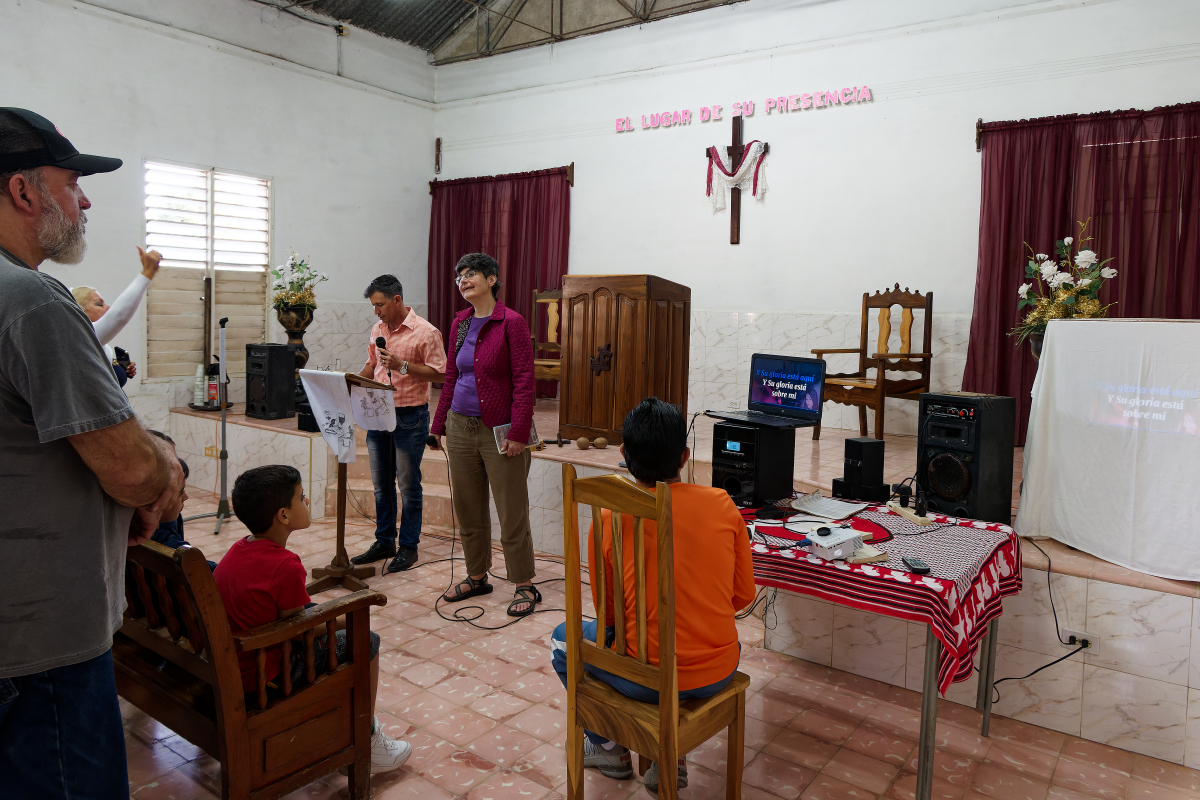
My third day in Cuba, I realized that grief had been lifted from my heart. And it still is. In worship, I was immersed in communities who KNEW and trusted the constant presence of G*d. Who used their minds and hands and hearts to their full capacity, but knew they were not acting alone, knew they didn’t carry the burden of outcomes.
I’m privileged [in the US]. I bought my condo. I’m fit enough to bike, know how to fix a flat, and can count on Blue Bikes and the MBTA when I can’t ride my own. Penicillin and albuterol and epinephrine are in my hands when I need them. My intellect knows G*d is by my side, but it’s so easy to fall into trusting the work of my hands, and taking on the burden of outcomes.
Intellectually, I can read the Beatitudes. It’s another thing to KNOW them in G*D’s presence.
Oscar Romero knew this reality. Dietrich Bonhoeffer knew it. Fannie Lou Hamer knew it. The reality that carried them through.
In Cuba, so much was out of our hands. The power could go out at any time. We might need to pull over and let the bus engine cool off. The pharmacy shelves were bare of western medicines. The doctors couldn’t run basic diagnostic tests.But God was always with us, revealing Godself through each other, and giving Cuban Friends power. Not mastery, but power. As I return to the United States, where I’m privileged to be able to get what I want instantly, let me remember that. To confuse power with mastery is the road to despair. Let us reveal Godself to each other, in our workplaces, in our communities, with power.
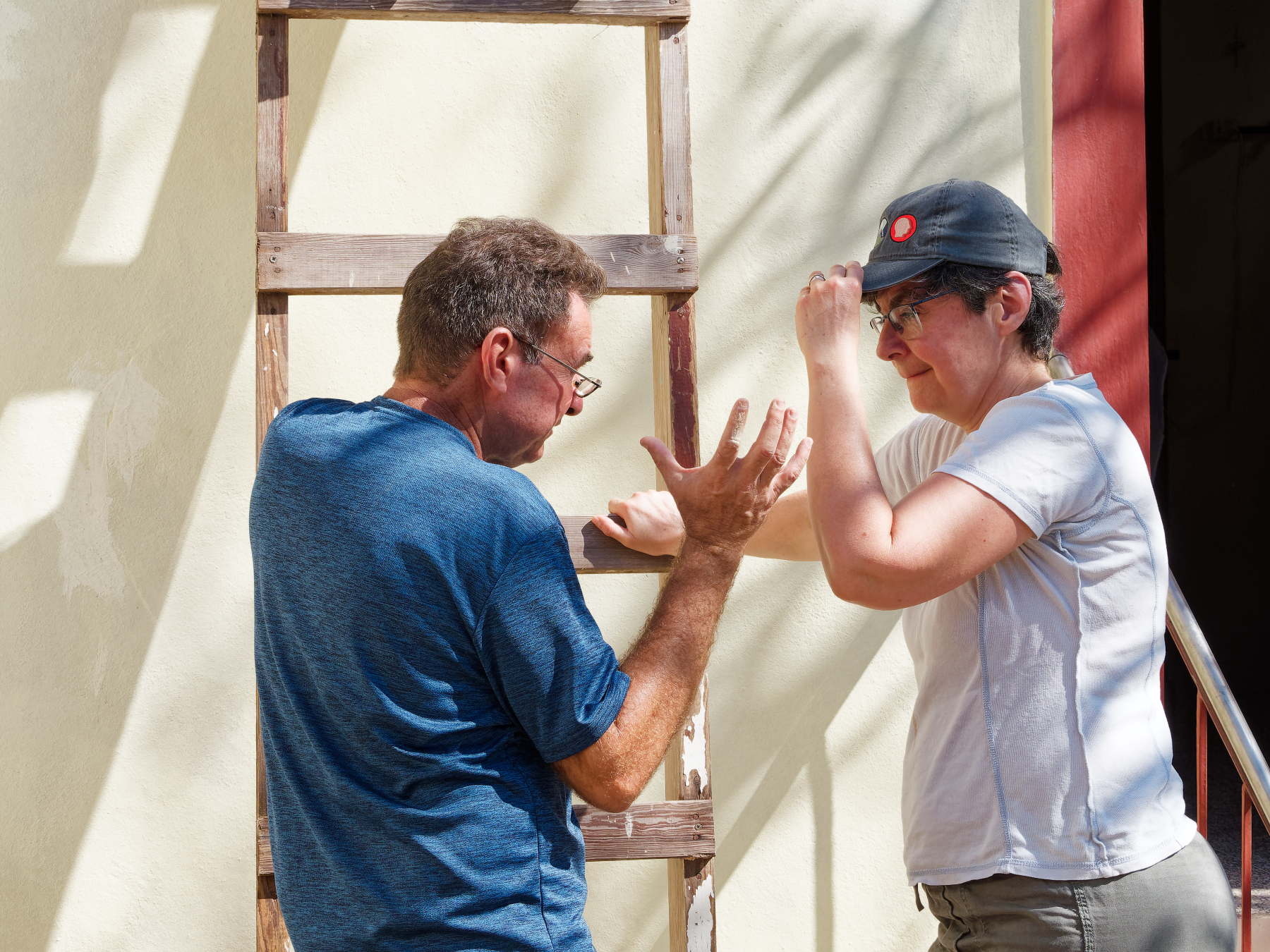
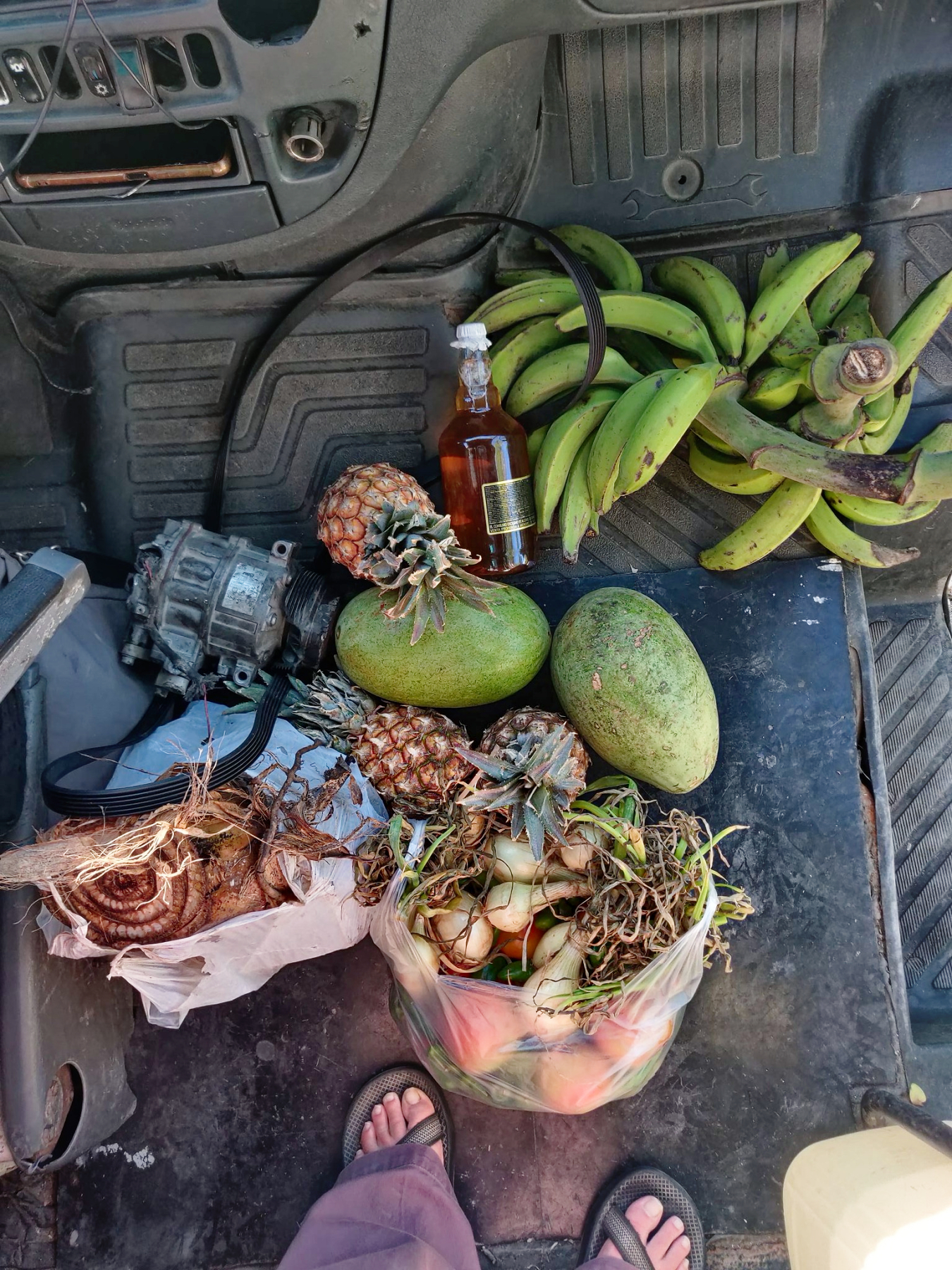
The photo below encapsulates some of the intertwined strands of our daily experience for me. Cuba Yearly Meeting has a 1998 BMW bus that Monchi (José Ramón) lovingly keeps running. As we were returning from Velasco, the pastor there gave him a semilla de banana (a root clump or rhizome to start a new tree) from their garden. Monchi also picked up some pineapples, papaya, onions, and honey (in a recycled rum bottle) from roadside farm stands along the way. Then, just as we were passing through Delicias, thunk! Monchi pulled the bus over, and the motorcycle cab driver behind us helped him pick up the compressor from the (no longer functional) air conditioner and the belt that had fallen on the road. Monchi determined we could safely get home without the belt, but we had to wait for the engine to cool before we could get underway again.
Back in Boston after eight days with Cuban Quakers, I don’t even know where to begin. G*d was truly as close as our breathing and moved among and through us. I was witness to the deep joy and deep heartbreak that Cuban Friends live with every day. I miss them already and my heart is a little larger now.—Judy Goldberger, New England Yearly Meeting
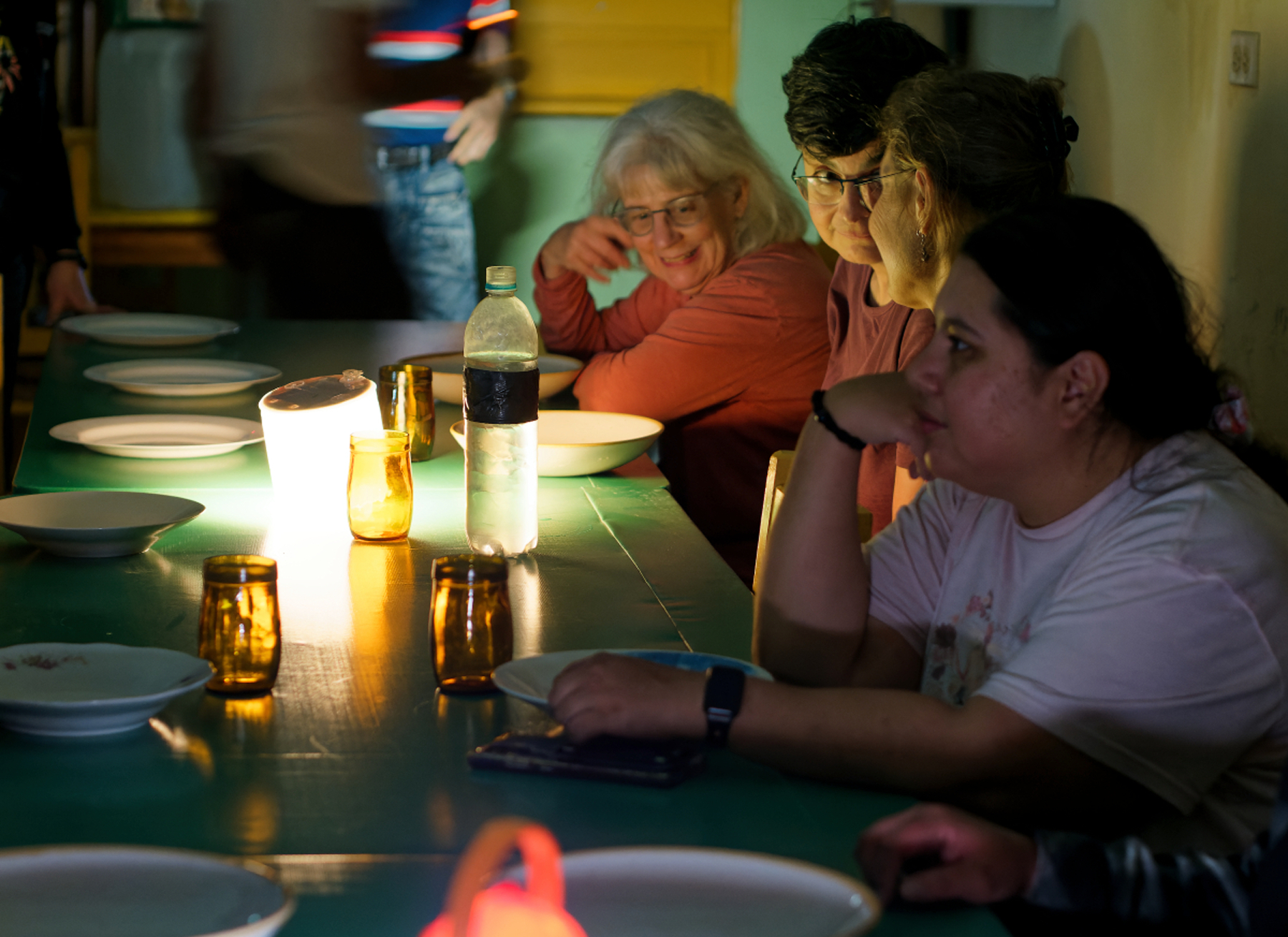
For the last several years, Friends in Cuba (as well as other residents) have been experiencing power outages that last throughout the day and evening, on a daily basis. The outages are due, in part, to a deficiency of fuel and spare parts for power plants. These blackouts represent the most severe economic crisis that the country has experienced since the dissolution of the Soviet Union in 1991.
This absence of electricity throughout the day has significantly disrupted daily life, impacting industries and businesses, as well as the capability to cook, run water, and maintain household necessities. Family members of Cuban refugees in Richmond have reported only having two hours of power per day.
Quaker churches have had to move their service times, or reduce them. Many Friends have canceled most of their services during the week, because the church building is dark and because people need daylight to be able to walk home, especially the elderly.
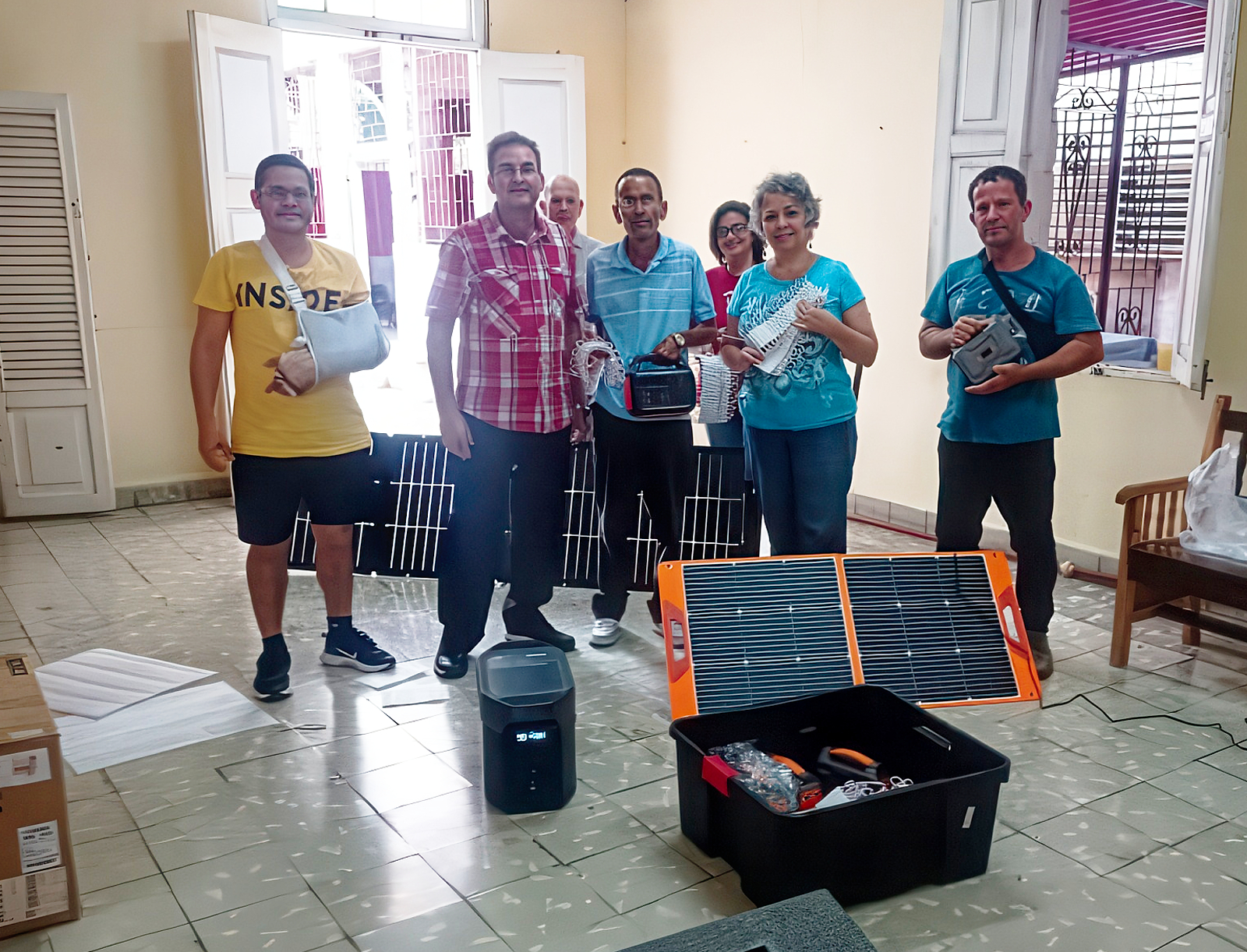
Early in 2025, Friends United Meeting purchased for Cuba Yearly Meeting several large solar “power plants” that can be used to generate and store electricity through the use of solar power, as well as a number of smaller storage batteries that can be charged through the power plants and hold enough power to charge phones and run lights. These power plants, solar panels, and batteries were intended to be carried to Cuba by FUM’s January Living Letters trips, but they had be to left behind because the power plants were too large to carry-on in an airplane and the smaller battery packs were left behind with the Miami Cuban Friends church, because in Miami there is a limit on the amount of lithium that can be carried on board a plane.
Finally, on April 11, Karla Jay, FUM Global Ministries Coordinator, drove to Louisville, Kentucky, to drop off three power plants, eight battery packs, and multiple solar panels with a Cuban logistics and remittance agency that was able to ship them to Cuba.
The batteries arrived in Puerto Padre, Cuba, at the end of May, where Cuba Yearly Meeting Clerk Jorge Luis Peña received them and, along with an electrician, has been working on figuring out how to use them. Then they are planning on distributing the power plants and batteries among Cuban Friends, and will be holding workshops on power plants and batteries in the different Monthly Meetings. The three biggest power plants will go to the churches which have the three biggest buildings: Guibara, Holguin, and Puerto Padre. Jorge Luis has expresses his gratitude to the FUM community. This will be a huge relief for the churches, he says, now they will at least be able to have the lights turned on.